


 English
 中文简体
中文简体 Español
Selección de proveedores de prendas de punto: qué verificar antes de su primer pedido al por mayor
Su primer pedido al por mayor a un nuevo proveedor de prendas de punto no debería ser un acto de fe. Un suéter de muestra que se ve bien en una foto aún puede llegar meses después con una densidad de puntada desigual, hilos flojos o un color que se matiza de manera diferente según la talla. Esas fallas generalmente comienzan antes de tejer la tela, no en la etapa de costura. Se deciden por la selección de hilo del proveedor, la configuración de la máquina, la rutina de acabado y la disciplina de inspección. Elija un proveedor de prendas de punto que controle esas cuatro variables de manera consistente y la mayor parte del riesgo de calidad se eliminará antes de que comience la producción.
Contenido
Qué controla un proveedor confiable de prendas de punto
Las prendas de punto se moldean tejiendo en lugar de cortando y cosiendo paneles planos, por lo que cada problema de calidad puede atribuirse a un parámetro de producción. Es poco probable que un proveedor que no pueda explicar esos parámetros pueda controlarlos.
- Selección de hilo. La composición de la fibra, el número de hilos y las capas determinan la sensación, la caída y el encogimiento de la prenda terminada. Pregunte por las especificaciones del hilo y el número de lote de tinte. Si el proveedor no puede proporcionárselos, su próximo lote no coincidirá con la muestra original.
- Calibre de máquina. El calibre es el número de agujas por pulgada. Un suéter grueso de calibre 7, un jersey de peso medio de calibre 12 y una fina camiseta sin mangas de calibre 16 se ejecutan en máquinas diferentes. Confirme que el proveedor asignará el calibre que su diseño requiere en lugar de utilizar cualquier máquina que esté libre.
- Refinamiento. Los tratamientos de lavado, suavizado y antibolitas convierten el tejido de punto crudo en una prenda con un tacto de primera calidad. Un proveedor que se salta estos pasos entrega suéteres que se sienten rígidos y forman bolitas después de algunos usos.
- Construcción y vinculación. Las costuras unidas son una señal de una construcción de tejido adecuada. Verifique cómo se refuerzan los puntos de tensión, como los hombros, las sisas y los puños, en los estilos más pesados.
- Inspección. Los controles en línea durante el tejido y una inspección final antes del empaque, idealmente bajo muestreo AQL 2.5, detectan defectos mientras aún son baratos de corregir.
La forma más sencilla de realizar pruebas de presión en estos puntos es comparar la muestra de preproducción con la muestra de referencia en una mesa de medición. Las medidas terminadas, la densidad de puntadas y los resultados de las pruebas de lavado le dicen más sobre un proveedor que cualquier página de catálogo.
| Punto de control | Que verificar | bandera roja |
|---|---|---|
| Abastecimiento de hilo | Composición de fibras, número de hilos, número de lote de tinte. | No hay hoja de especificaciones disponible |
| calibre de la máquina | El calibre coincide con el peso de diseño. | Un calibre utilizado para cada estilo |
| Acabado | Programa de lavado, antipilling, prueba de encogimiento. | No hay resultados de la prueba de lavado |
| Construcción | Costuras unidas, puntos de tensión reforzados. | Costuras planas en estilos de punto grueso. |
| Inspección | Comprobaciones en línea más muestreo final AQL 2,5 | No se mantienen registros de inspección |
| Muestreo | Muestras de referencia, preproducción y envío. | La calidad de la muestra difiere de la del volumen |
También vale la pena recopilar referencias comerciales. Una marca que produce una silueta similar le dirá cómo se comporta el proveedor bajo la presión real de un pedido, no solo qué tan bien se presenta en una revisión de muestra.
MOQ, plazos de entrega y capacidad de producción real
La mayoría de los proveedores de prendas de punto establecen mínimos entre 200 y 500 piezas por color, por estilo, y cotizan plazos de entrega a granel de 45 a 75 días después de la aprobación de la muestra. Las cifras cambian según la disponibilidad de hilo y la temporada, por lo que la pregunta más importante es qué sucede con su pedido cuando la fábrica está ocupada. Pregunte cuántas líneas activas tiene el proveedor, cómo se asignan los nuevos pedidos durante la temporada alta y qué remedio se aplica cuando se retrasa la fecha de entrega.
La propiedad de la fábrica cambia la respuesta a esas preguntas. Un proveedor con una planta de producción dedicada tiene control directo sobre la planificación de la capacidad, la continuidad del lote de tinte y las fechas de envío. Changshu Sofia Sweater, por ejemplo, produce prendas de punto en una superficie de 9.600 metros cuadrados. fábrica donde 150 empleados se ocupan de estilos para hombres, mujeres y niños. Si, en cambio, se abastece a través de una empresa comercial, verifique qué planta realmente tejerá su pedido y confirme el cronograma de esa planta por escrito antes de pagar un depósito.
Haga las preguntas correctas sobre hilos y materiales.
El hilo es la variable más importante en el costo y la calidad de las prendas de punto. Una mezcla de lana y algodón, un hilo de merino doblado y una mezcla de poliéster se comportan de manera diferente en la máquina y en el lavado. Obtenga estos detalles confirmados antes de aprobar una muestra:
- ¿El hilo está preencogido o tratado para lavar a máquina? Las fibras naturales, como la lana y el algodón, se encogen a menos que el acabado esté diseñado para las instrucciones de cuidado de la etiqueta.
- ¿Qué es la torsión y la capa? Los hilos con poca torsión se sienten más suaves pero se pelan más rápido, mientras que una mayor torsión agrega durabilidad a costa de algo de suavidad.
- ¿Es estable el lote de tinte? Dos lotes del mismo color deben llevar el mismo número de lote de tinte. Los lotes de tintes mezclados son la causa más común de decoloración en un envío.
- ¿Están documentadas las mezclas? El porcentaje de nailon, spandex u otras fibras modifica el estiramiento y la recuperación. Poner la composición en la orden de compra.
Si la sostenibilidad es importante para su marca, pregunte si el hilo está certificado según OEKO-TEX, GOTS o un estándar comparable, y si la fábrica puede proporcionar esos certificados. Para programas con tacto de lana o cachemira, pregunte también sobre la experiencia del proveedor con la ingeniería de fibras y la optimización del tacto. Lo que parece un tejido de primera calidad suele ser el resultado de una construcción controlada del hilo y una secuencia de acabado específica, no un accidente.
Lea la gama de productos como una declaración de capacidad.
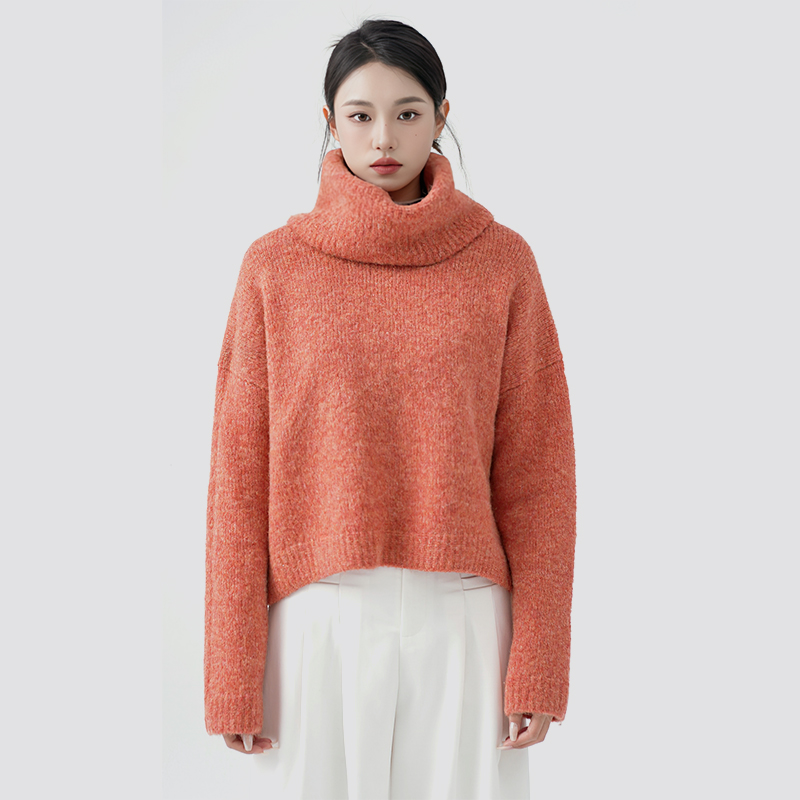
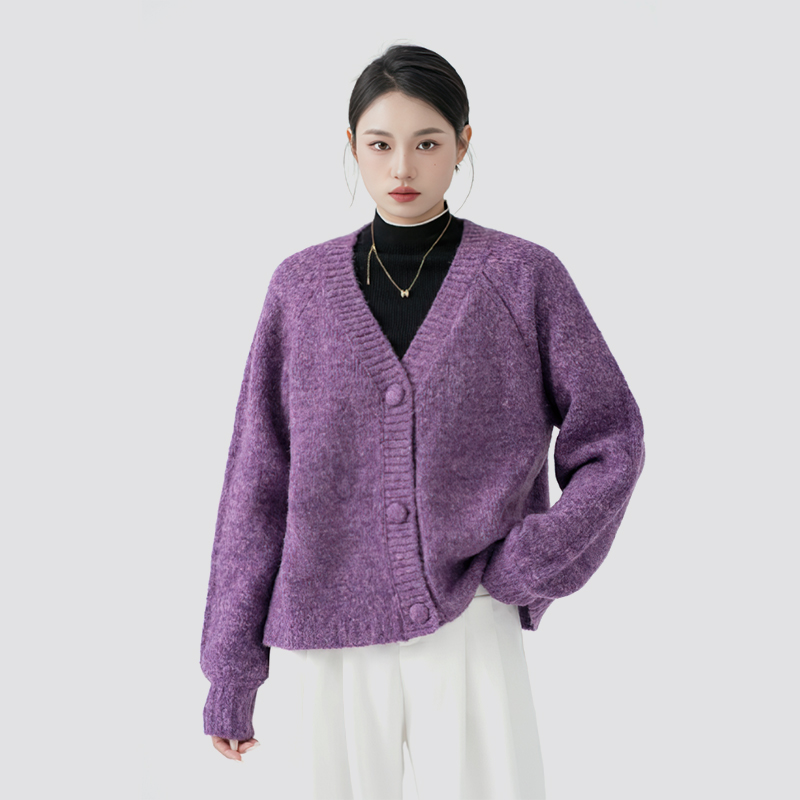
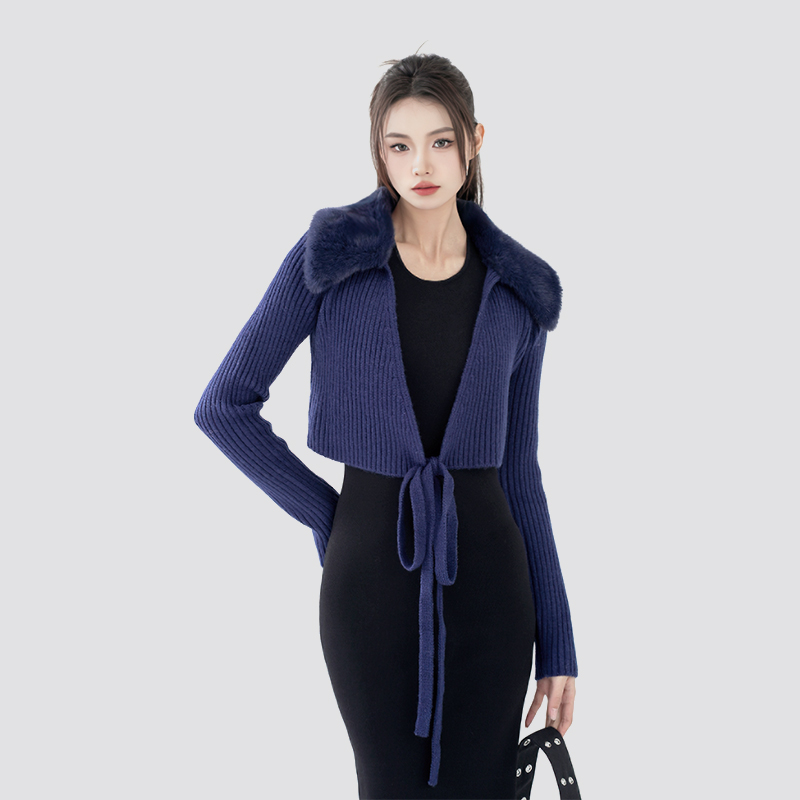
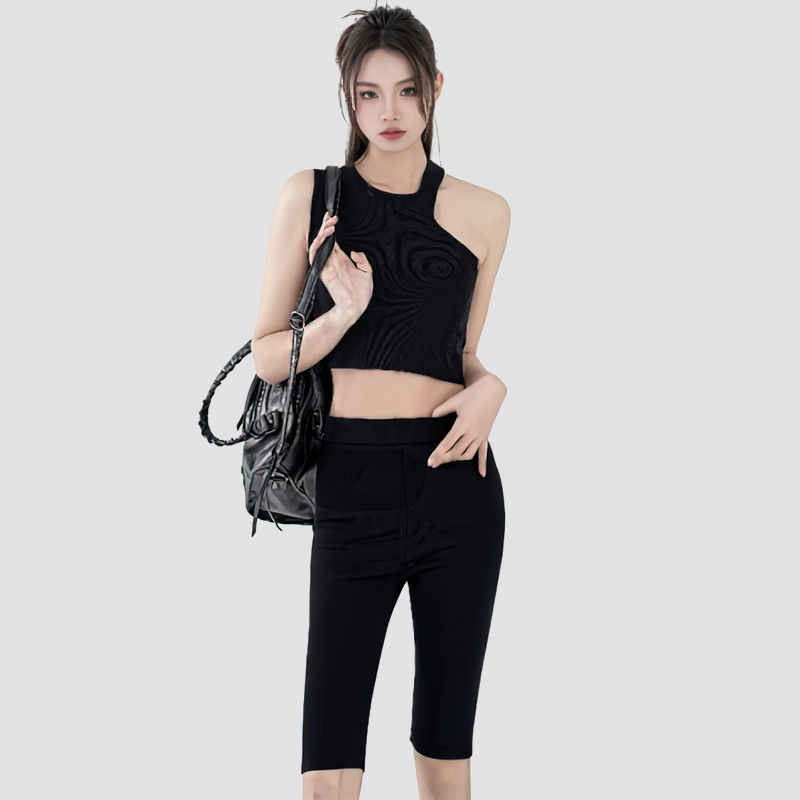
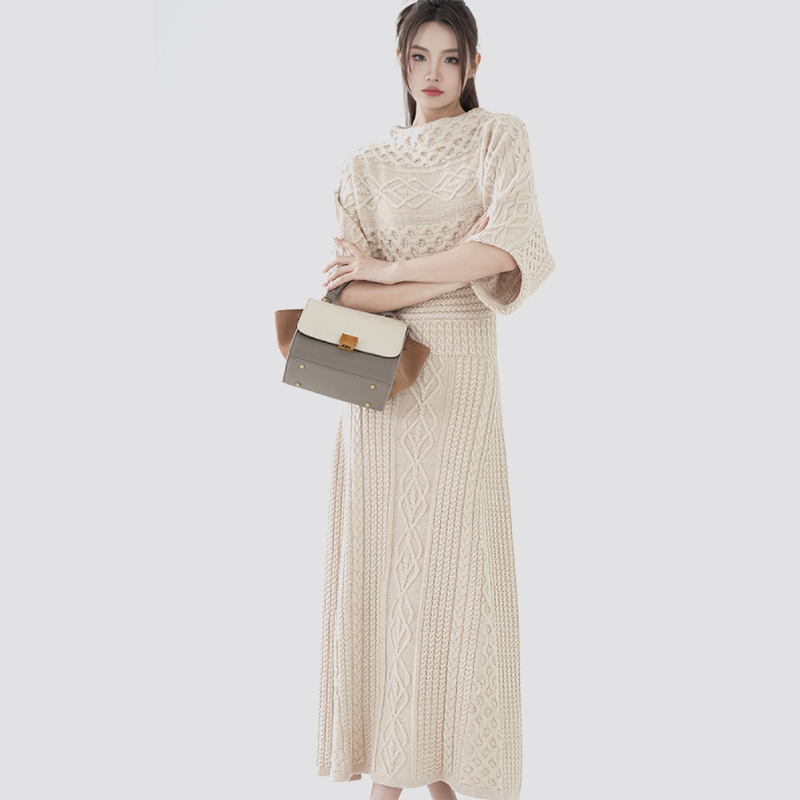
La gama de productos existente de un proveedor es una de las señales más honestas de lo que puede ofrecer a escala. Un jersey de cuello alto de punto trenzado, un cárdigan de punto con cuello de piel y una camiseta sin mangas con cuello en V de calibre fino requieren diferentes títulos de hilo, calibres de máquina y programas de acabado. Cuando un proveedor de prendas de punto ya opera los tres en su propia planta, ha demostrado la flexibilidad de la que dependerá su marca cuando agregue estilos de temporada.
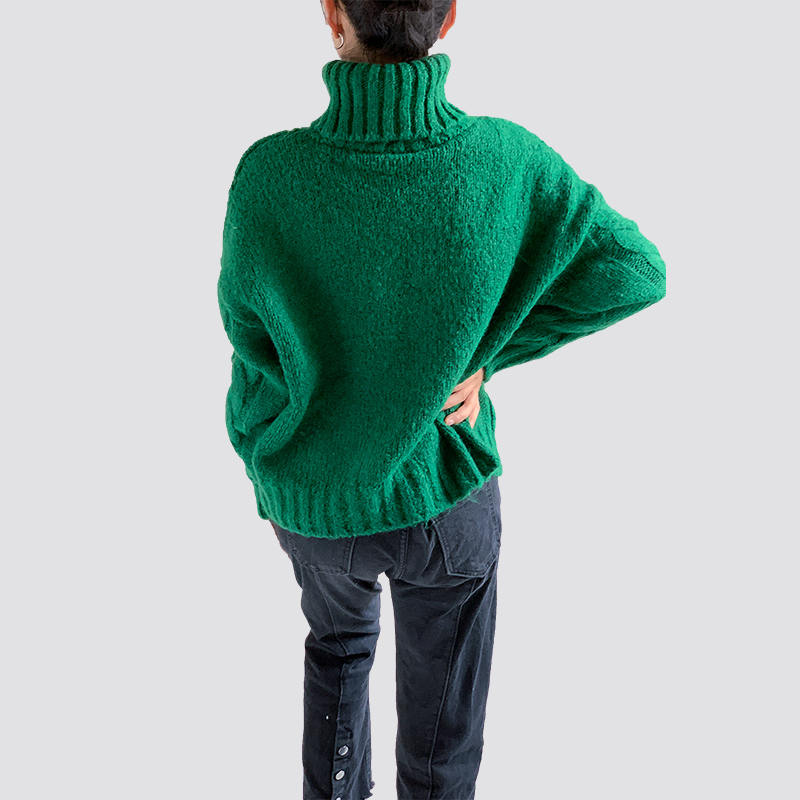 Jersey de ochos con cuello alto verde Este jersey de cuello alto tejido con ochos resalta la capacidad del proveedor para manejar diversas construcciones de cuello y patrones de puntadas, lo que lo convierte en una pieza central confiable para los programas de prendas de punto de temporada. Ver producto →
 Los jerseys tienen la más amplia gama de siluetas, escotes y estructuras de puntadas, por lo que son el núcleo de la mayoría de los programas de prendas de punto. Los cuellos de tortuga, cuello redondo y cuello en V crean cada uno diferentes demandas de construcción de cuellos, y un proveedor con líneas de suéteres comprobadas se encargará de ellos sin tener que rediseñar el proceso desde cero.
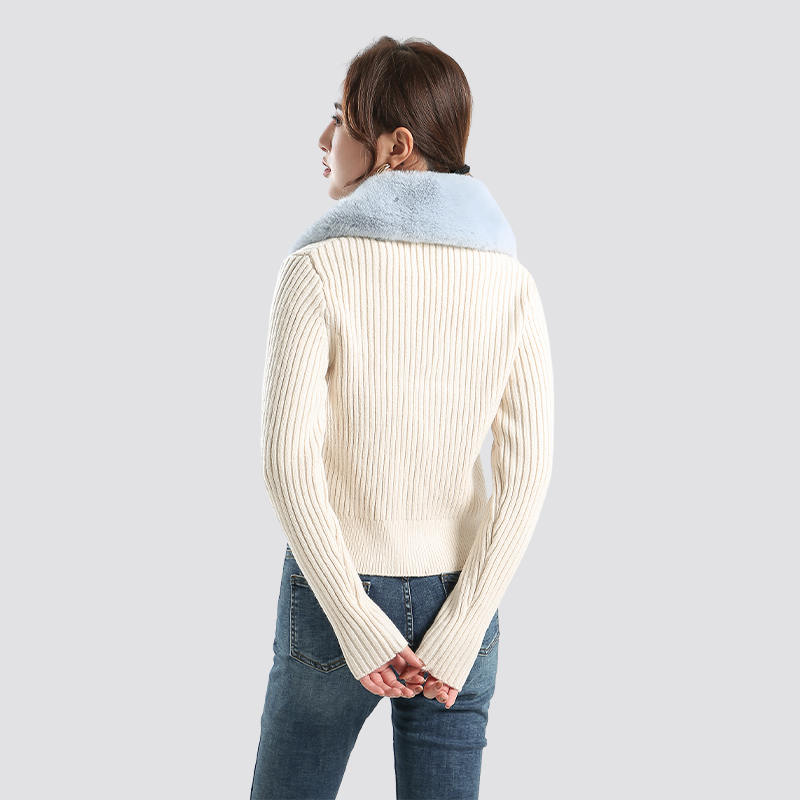 Cárdigan de punto con cuello de piel Un cárdigan con cuello de piel demuestra habilidades avanzadas de acabado, como la construcción de tapetas y solapas, lo que indica fuertes vínculos y departamentos de planchado para una prenda de calidad pulida. Ver producto →
 Los cárdigans añaden otra capa de complejidad con tapetas de botones, solapas y acabados en los bordes. Una fábrica que produce cardigans constantemente tiende a tener fuertes departamentos de unión y planchado, que son tan importantes como el tejido para la apariencia final del estilo.
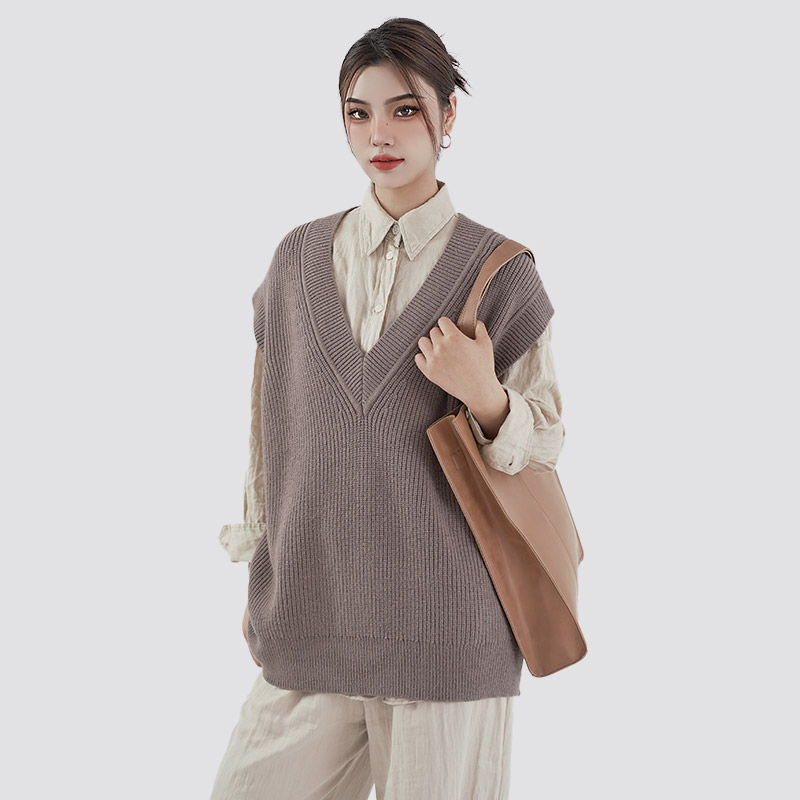
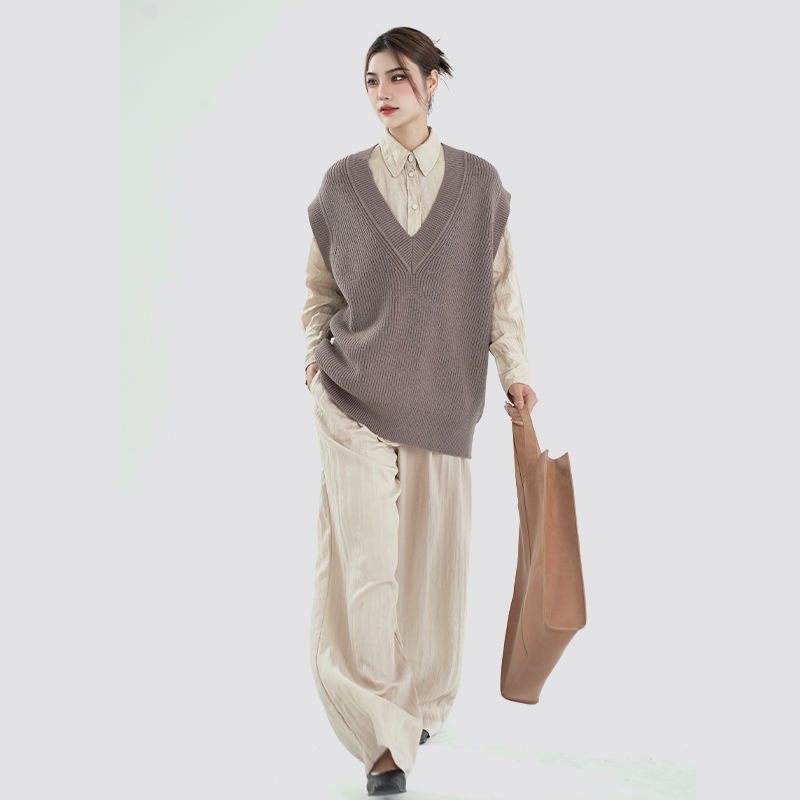 Camiseta sin mangas de punto con cuello en V Esta camiseta sin mangas holgada con cuello en V prueba el control de calibre y revela problemas de tensión, ideal para evaluar la precisión de un proveedor antes de comprometerse con un surtido completo de temporada. Ver producto →
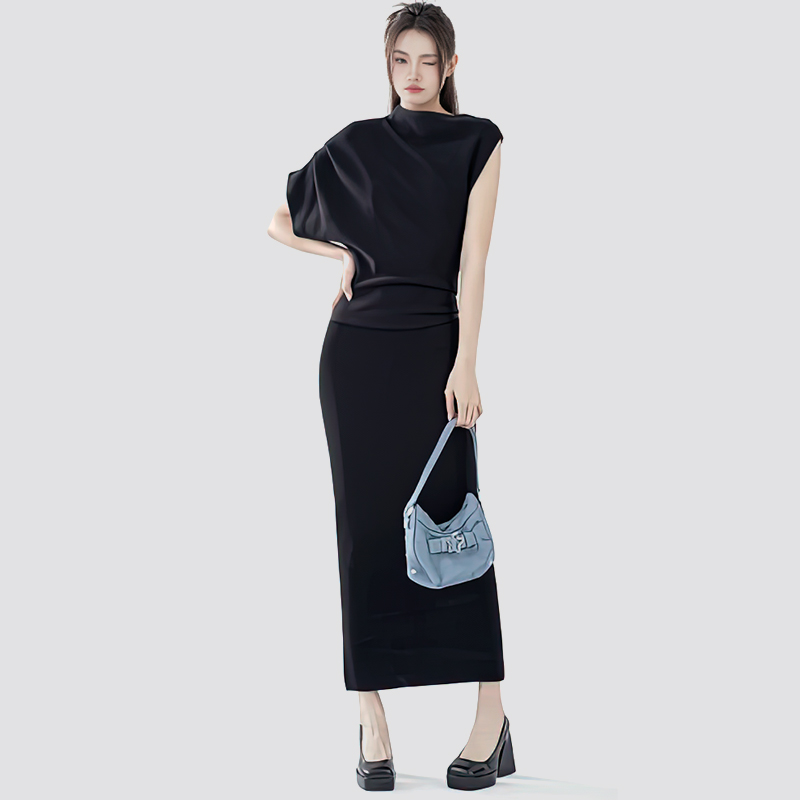
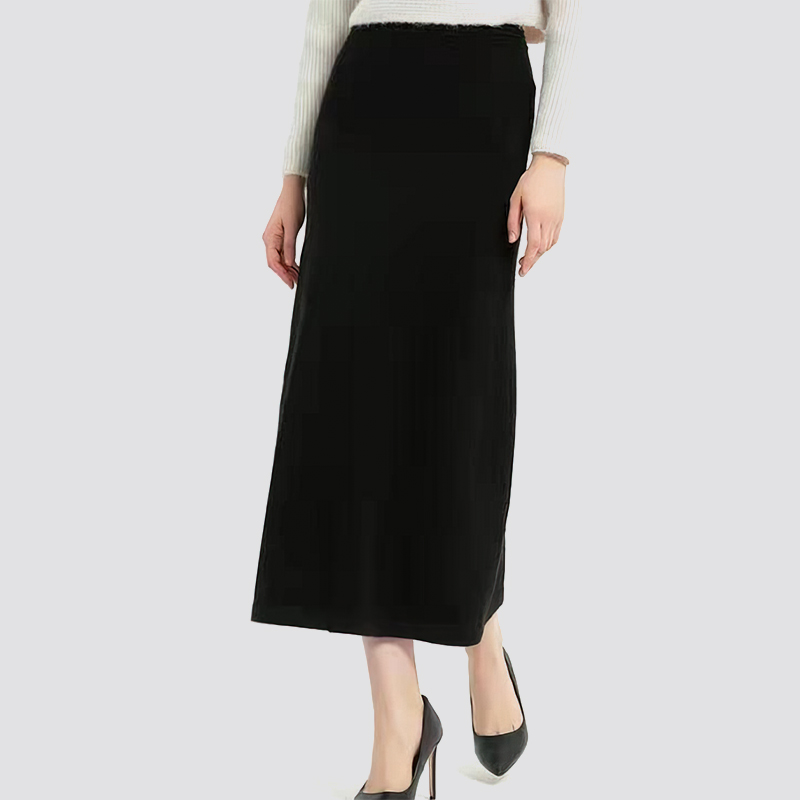
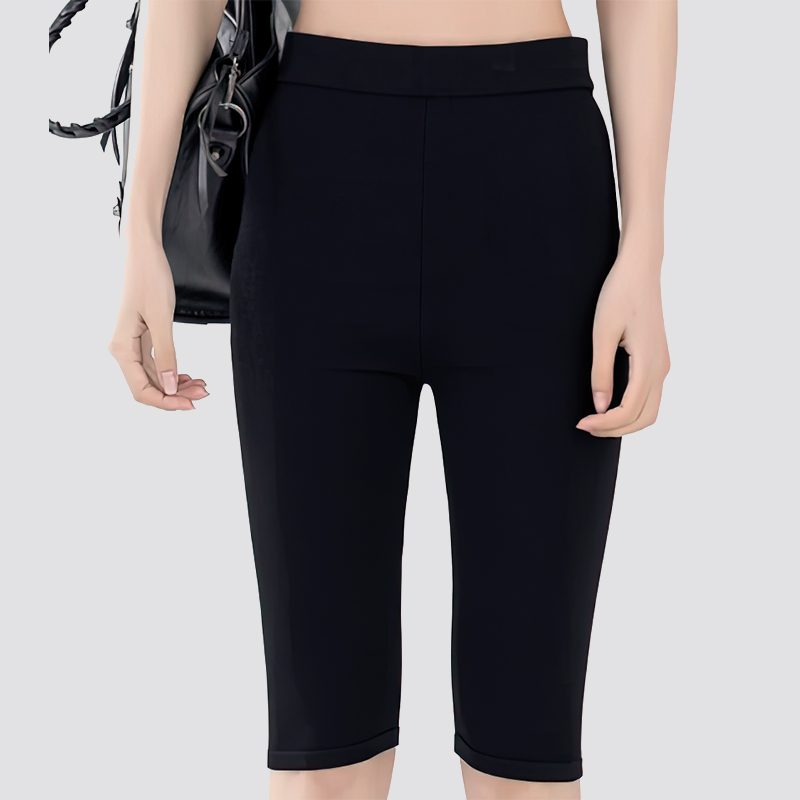
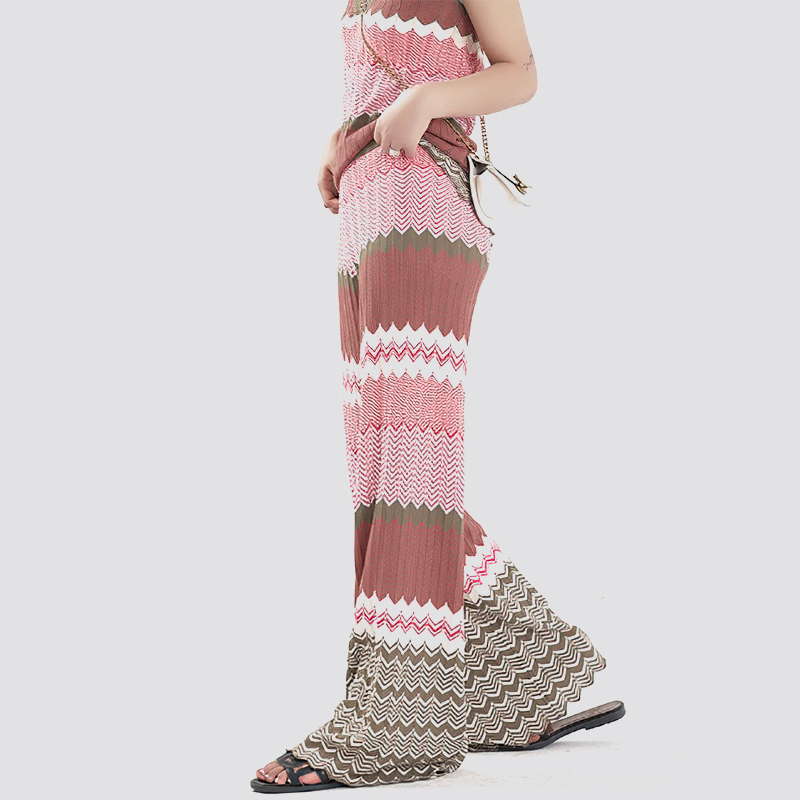
 Las camisetas sin mangas y los chalecos son una prueba útil del control de la talla, porque los tejidos más ligeros revelan problemas de tensión y distorsión de la forma rápidamente. Si está planificando un surtido completo de temporada, busque un proveedor que pueda cubrir jerseys, cárdigans, camisetas sin mangas, faldas y pantalones de punto bajo un mismo techo, de modo que la calidad, la comunicación y la entrega se gestionen en una sola línea de responsabilidad.
Cómo empezar con un nuevo proveedor de prendas de punto
Comience con un estilo y un color en lugar de una línea completa. Solicite una muestra de referencia y luego una muestra de preproducción tejida con el hilo y calibre exactos que se ejecutarán a granel. Confirme los resultados de la prueba de contracción y las medidas finales para cada tamaño. Si el proveedor maneja estos pasos sin fricciones, podrá ampliar el programa en la siguiente temporada.
Antes de comprometerse, envíe su paquete tecnológico, el precio objetivo y el tiempo de entrega requerido al proveedor a través del pagina de contacto . Una fábrica que responde con preguntas específicas sobre el número de hilo, calibre, acabado y embalaje es aquella que planifica la producción adecuadamente, que es exactamente el comportamiento que se desea detrás de un pedido al por mayor.
El proveedor de prendas de punto adecuado es aquel que trata su muestra de referencia y su envío a granel como el mismo producto. Verifique los detalles, haga las preguntas específicas y será mucho más probable que su primer pedido llegue a tiempo, en el calibre y dentro de la tolerancia.


-

Teléfono: +86-13913661100
-

Correo electrónico: frank@sofiafashion.com
-

Dirección: No.886, Calle Minfeng, Avenida Xushi, Pueblo de Dongbang Town, Ciudad de Changshu, Provincia de Jiangsu, China
© 2023 Sofia Group. Reservados todos los derechos
